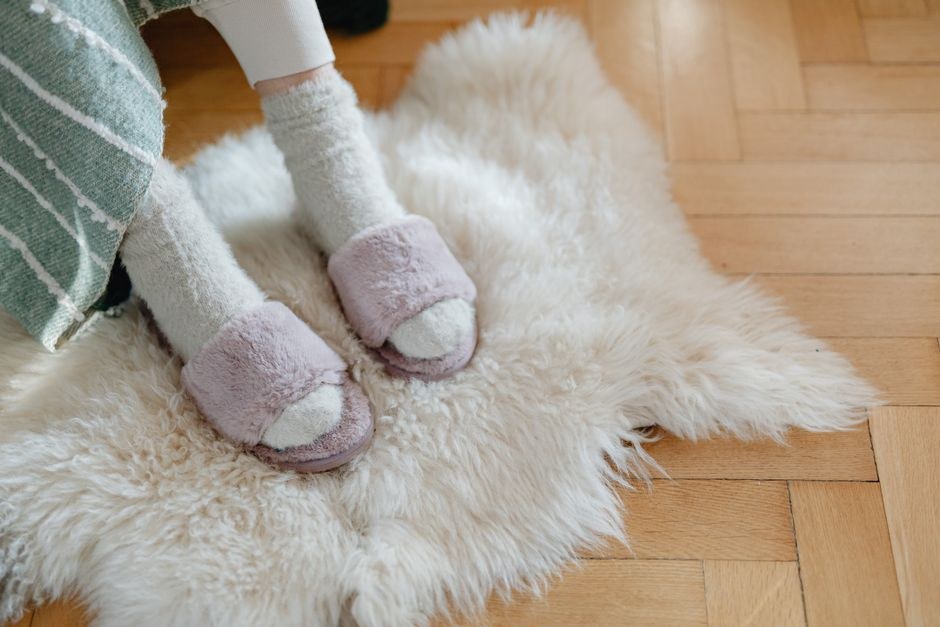
Men's memory foam slippers are a distinct sourcing brief. Learn which comfort features male shoppers pay for and how to spec them for wholesale.
Men's slippers are not a scaled-down version of women's slippers, and treating them that way is one of the main reasons a men's line underperforms when you source memory foam slippers for men. Male shoppers walk into the category with a different set of expectations: they want the slipper to feel solid underfoot, hold its shape after months of daily wear, and look neutral enough to keep by the front door. If you are buying for a big-box chain, a workwear brand, or an online store with an older male customer base, those expectations should drive the spec sheet, not just the colour palette.
This guide covers what actually differentiates a men's memory foam slipper at retail, and where the costs sit when you build one for wholesale.
Why men's slippers behave like a separate product category
Women's slipper programmes turn over on colour and trim. Men's programmes turn over on fit and durability. In practice, that means a men's brief should lead with footbed length and width, sole hardness, and lining retention, and treat decoration as secondary.
Foot length matters more than most buyers expect. Men's shoe sizing runs to larger sizes more consistently, and a last that is simply stretched from a women's mould often produces a footbed that is too narrow at the arch. If your target customer is a size 43–46, confirm the footbed dimensions at those sizes rather than relying on the nominal size label.
Weight and sole hardness are the second differentiator. A soft, silent EVA outsole reads as cheap to many male shoppers. A denser sole with visible tread, more often a TPR or rubber compound, feels like a real shoe and justifies a higher retail price.
- Footbed length and width at the largest sizes in your range
- Sole hardness and tread depth, not just anti-slip claims
- Lining that stays lofted rather than packing flat
- Upper that holds shape when the wearer steps in without hands
Comfort features male shoppers actually pay for
Not every premium feature earns its cost back at retail. Here is where the money usually goes, in rough order of return.
Memory foam density and thickness
Low-density foam compresses into a flat pancake within a season, and returns generate more cost than the saving. For men's slippers, a thicker, higher-density memory foam layer under a firmer base generally performs better. Ask your supplier for the foam density in kg/m³ and the layer thickness in millimetres, and test a pair under a 90 kg load for a few weeks before committing to volume. A foam that feels luxurious in a showroom sample can still bottom out under a heavier wearer.
Sole construction and grip
A man who wears the same pair to take out the bins and to stand in the kitchen wants a sole that does not slip on tile and does not creak on wood. TPR and rubber compounds hold up better than thin EVA here. If your price point is entry-level, a moulded EVA sole with a textured tread is acceptable, but do not market it as durable.
Lining and warmth balance
Plush linings sell in cold-weather markets, but over-insulation is a real complaint. Men run warmer on average and often wear slippers with socks. A plush or sherpa lining that can be worn year-round is a safer volume bet than the heaviest pile available. For open-toe or cross-band styles, skip the heavy lining entirely.
Structured uppers
Faux suede and moccasin constructions outsell soft knitted uppers in men's programmes because they look like footwear rather than sleepwear. A stitched moccasin toe or a suede-look upper with a stitched-down sole signals durability at a glance. Knitted uppers still work, but they belong in the entry price tier or in a travel and gifting assortment.
Specifying a men's memory foam slipper for your price tier
Three rough tiers cover most wholesale briefs. These are illustrative, not quotations, and your factory will price against your actual quantities and materials.
- Entry tier: knitted or felt upper, basic memory foam layer, moulded EVA sole. Good for supermarket promotions, hotel shops, and gift sets.
- Mid tier: faux suede or microfibre upper, denser memory foam over a cushioned base, TPR or rubber sole, plush or sherpa lining. This is where most brand-owner programmes sit.
- Upper tier: stitched moccasin or structured hybrid construction, multi-layer foam, rubber sole, removable or washable insole, premium lining. Sold as a considered purchase rather than a cheap add-on.
Decide the tier before you discuss tooling. A moulded sole needs a tool, and changing sole construction mid-development is the most common cause of delay in a men's programme.
Testing and selling the pair you built
Two tests catch most men's slipper failures before shipment. First, a walk test on a wet tile surface for grip. Second, a compression test on the foam after a short wear cycle, checking whether the heel area recovers its height. Both are easy to run on a small sample set and both flag the complaints that show up in reviews.
On the marketing side, lead with the problem the man is trying to solve: cold floors, slippers that collapse, slippers that slide on stairs. Photography should show the sole, not just the upper. Size ranges should be printed on the packaging in men's shoe sizes, not unisex labels that force the buyer to guess.
Next steps for buyers
Start with your target retail price and the largest size you intend to carry, then work backwards into foam density, sole type, and lining. Ask any prospective supplier for foam density in kg/m³, sole material, footbed dimensions at your largest size, and a sample you can wear for a week. If they cannot state the foam specification in numbers, treat that as a warning. Build your men's range as its own line with its own testing, and it will hold its price better than a recoloured version of your women's programme.
Tags: memory foam slippers, men's slippers wholesale, cotton slipper manufacturer, OEM slippers, house slippers supplier