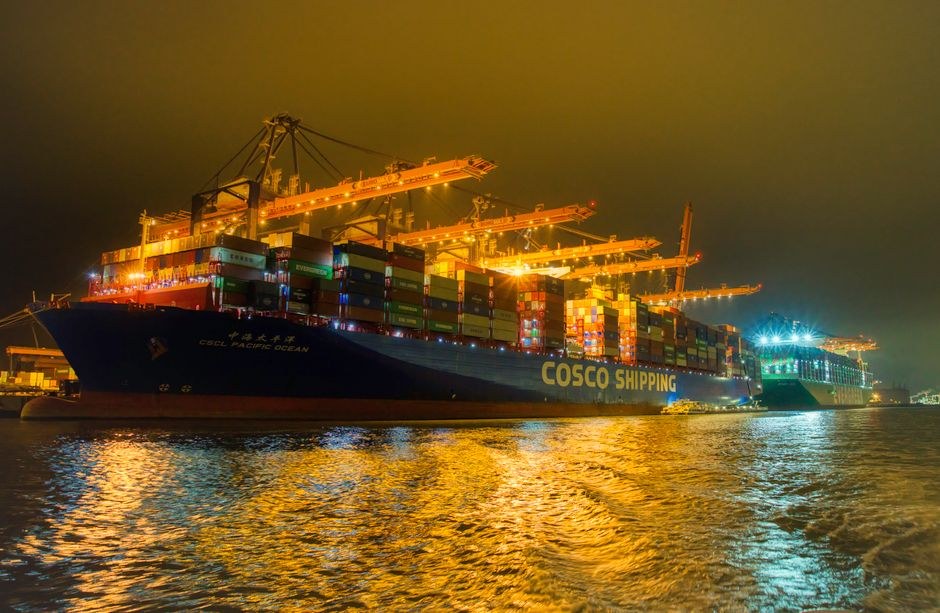
Practical guide for importers on moving cotton slippers from Cixi factories through Ningbo port. Covers Cixi to port logistics, container loading and export documents.
Know your Cixi to port logistics before you book a single container. The distance is short—often under 100 km—but the difference between a clean loading day and a rolled booking sits in documentation, truck availability and how your supplier handles the last mile. If you buy from a Ningbo slipper manufacturer that already moves volume through Ningbo-Zhoushan, most of the friction disappears. If you don't, you inherit it.
Why Ningbo Port Dominates Slipper Exports from Zhejiang
Ningbo-Zhoushan is the world's largest port by cargo tonnage, and for soft goods like footwear it is the natural exit from Zhejiang. Your factory in Cixi is roughly 60–90 minutes from the main container terminals at Beilun and Meishan. That proximity matters. A container that can be loaded, trucked and gated in the same day has fewer failure points than one that spends two days on the road to a distant port.Ningbo also runs more direct sailings to the US East Coast, Northern Europe and the Mediterranean than most secondary Chinese ports. That reduces transshipment, which reduces the chance of damage or delay on a shipment of plush or memory foam slippers that are bulky but not high-value.
The trade-off is schedule pressure. Peak season—roughly August to October—fills the terminals. If your cotton slippers shipping window lands in that period, book space earlier than feels necessary. Carriers tighten free time and roll low-priority bookings first.
Cixi to Port Logistics: What Happens Between Factory and Terminal
The Cixi to port leg is simple but not automatic. Most factories quote FOB Ningbo, which means they control the trucking to the terminal and the export clearance. Your job is to confirm the details in writing.
- PICK-UP—Confirm whether the factory loads at their own dock or uses a nearby consolidation warehouse. Some smaller Cixi workshops truck cartons to a forwarder's warehouse first, adding a day.
- TRUCK TYPE—A 40HQ needs a container chassis, not a flatbed. Check that the factory or their forwarder can pull an empty container in the same day the cargo is ready.
- LOADING WINDOW—Ask for a loading date range, not a single date. If a truck is late, the container misses the vessel and you eat the rollover fee.
- VGM—Verified Gross Mass must be submitted before the terminal accepts the container. This is a two-minute task that stalls shipments when missed.
Cartons of slippers are lightweight, so weight is rarely the constraint. Volume is. A 40HQ holds roughly 1,800–2,200 cartons of standard slippers, depending on carton size and how well the factory stacks them. If you order mixed SKUs—say men's memory foam, women's knitted cuff, children's rubber sole—the cartons won't nest as tightly. That can cut payload by 10–15%. Plan your order quantity around that reality, not the optimistic number in a supplier's email.
Documents That Must Be Right Before the Container Leaves Cixi
Most delays I see are paperwork delays, not production delays. The factory finishes on time, then the booking sits because one document has a typo. Check these before the truck rolls.
- Commercial invoice and packing list—match the PO exactly. Mismatched SKU counts trigger customs queries.
- HS code—cotton slippers usually fall under 6404 or 6405, but the subheading depends on upper material and sole. Wrong codes mean reclassification and extra duty.
- Bill of lading instructions—consignee name, notify party and delivery address must be letter-perfect. Correction fees at destination are expensive.
- Certificates—if your market requires BSCI, ISO 9001 or a specific test report, have it scanned and ready. Don't wait until the vessel is loading.
If you are working with a cotton slipper manufacturer China team that exports regularly, they will have a document checklist. Ask for it upfront and reconcile it with your own freight forwarder's requirements. Two checklists are better than one surprise.
Booking, Sailing and What to Confirm at Destination
Once the container gates in, the port handles the rest—but you still own the outcome. Confirm the vessel name, voyage number and estimated time of departure with your forwarder within 24 hours of sailing. Carriers change vessels; a missed notification can leave you expecting cargo that moved to a different ship.
At destination, the two most common cost surprises are demurrage and detention. Demurrage is the terminal charging you for leaving the container at the port. Detention is the carrier charging you for keeping the container outside the port. Slippers clear customs quickly in most markets, but if your broker is slow or your importer of record details are wrong, those clocks start ticking. Budget a few days of buffer and communicate the arrival date to your warehouse team early.
For large retail programmes, consider a forwarder that offers door delivery and customs brokerage as a package. It costs a little more per container but removes the handoff between port and truck that causes most post-arrival delays.
Practical Closing Advice for Your Next Slipper Shipment
Lock your shipping plan before you lock your production plan. Two things consistently save importers money: booking space 4–6 weeks ahead in peak season, and confirming the exact loading address and truck arrangement with the factory at least a week before cargo is ready. Everything else—the port, the vessel, the clearing—flows from those two decisions.
Ask your supplier three questions: Which terminal do you truck to? Who submits the VGM? What is your rollover policy if the container misses the vessel? A factory that answers all three without checking is one you can trust with a repeat order. If you are still comparing suppliers, insist on a written shipping term sheet before you place a deposit. It takes ten minutes and prevents the most expensive misunderstandings in bulk slipper sourcing.
Tags: Ningbo port, cotton slippers shipping, Cixi logistics, container loading, export documents