A practical QC checklist for importers sourcing OEM cotton slippers from China, covering pre-production samples, inline checks and final inspection.
If you are importing OEM cotton slippers from China, your quality control plan matters more than the price on the quotation. Most buyers who get burned do not lose money because the factory was dishonest. They lose money because nobody agreed on what "good" meant before the production line started, and nobody checked the goods until the container was already sealed. The checklist below is the one I would walk any buyer through, whether you are ordering 2,000 pairs of memory foam slippers or a private-label run of plush-lined house shoes.
Step 1: Lock the Pre-Production Sample
Everything downstream depends on this single pair. Before the factory sources bulk fabric or cuts anything, they should send you a pre-production sample (PPS) built from the actual materials and components they intend to use in mass production. Not a hand-made showroom sample. Not the one the trading company showed you in March.
When the PPS arrives, treat it as a contract artefact. Sign and date it, keep photos, and send one signed copy back to the factory. If a dispute arises in month three, this pair is your reference. Vague emails like "similar to approved sample" are not.
Check on the PPS:
- Upper fabric weight and hand feel — knitted cotton, terry, faux suede and sherpa all vary by supplier, and a lighter greige weight changes how the slipper wears.
- Filling type and thickness — memory foam density, plus any secondary foam layer.
- Sole material and tread pattern — EVA, TPR or rubber, and whether the anti-slip pattern matches the drawing.
- Colour against your Pantone reference, ideally under D65 lighting.
- Stitching density on the cuff, cross bands or moccasin seam.
- Labelling placement — woven label, printed logo, care label, hangtag.
Ask the factory to record the fabric weight, foam density and sole hardness on the sample tag itself. If they cannot tell you the foam density in numbers, you are buying a feeling, not a specification.
Step 2: Agree the Inspection Standard Before Cutting
Send the factory a written AQL (Acceptable Quality Limit) standard as part of the purchase order, not as an afterthought. A typical arrangement for consumer footwear is AQL 2.5 for major defects and 4.0 for minor defects, inspected under ISO 2859-1 Level II. That is not the only standard in the market, but it is the one most third-party inspectors in China work to by default, so it keeps everyone on the same page.
Define what counts as a defect in your product. For cotton slippers, buyers usually agree that the following are major defects:
- Sole separation, glue bleed or a visibly misaligned sole edge.
- Foam filling that has collapsed, shifted, or leaves a hard ridge underfoot.
- Broken or skipped stitching on a load-bearing seam.
- Colour shading outside your approved tolerance between left and right of the same pair.
- Wrong or missing label, or logo printed at the wrong size or placement.
- Unpleasant odour — usually a sign of low-grade adhesive or damp storage.
Minor defects — loose threads, slight surface fuzz, faint markings that brush off — should still be capped. Otherwise you will receive a shipment that technically "passes" and still looks tired on shelf. Put a number on it: no more than X minor defects per carton, and a written rework procedure for anything above that.
Step 3: Inline Checks While Production Is Running
Final inspection at the end of the run is too late to fix a systematic problem. If the factory cut the sole mould wrong, 20,000 pairs are wrong before anyone opens a carton. Arrange at least one inline visit once the line is running but before the bulk of the order is packed.
What to look at during inline checks:
- Is the fabric being cut from the same roll approved on the PPS? Compare against your retained swatch.
- Is the foam being used at the agreed density and thickness? Ask to see the supplier invoice or the roll label.
- Are the dies and moulds the same ones used for the approved sample?
- How is the sole being attached — glued, stitched, or both? Check the glue type and press time if you can.
- Are workers inspecting as they go, or is everything pushed to the end of the line? A factory with no inline QC station will bury its defects in the cartons.
This is also the moment to check packing. Are polybags the right thickness? Are sizes paired correctly? Are inner boxes labelled with size and colour, or just a scrawled marker that will confuse your warehouse?
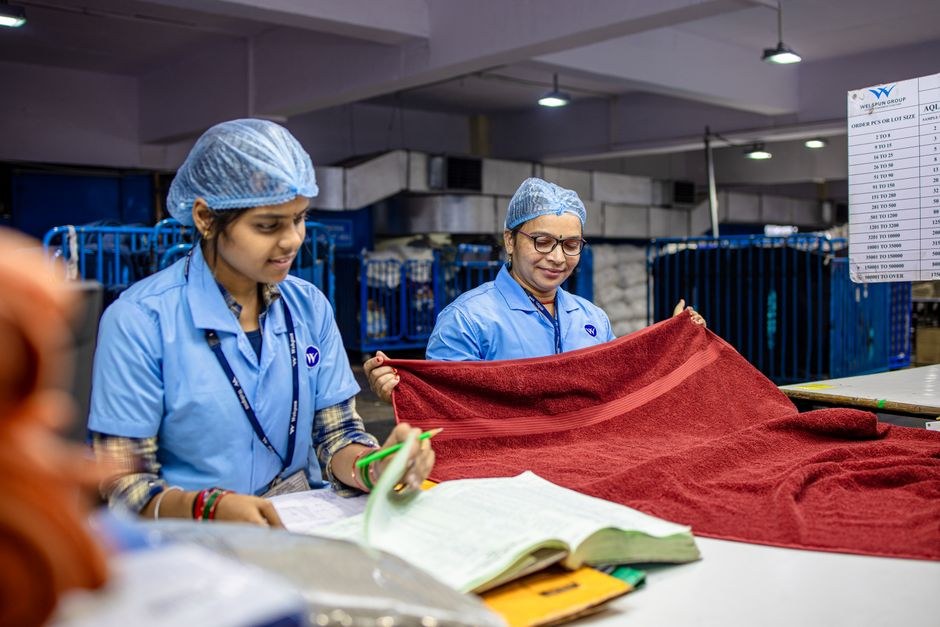
Step 4: Final Random Inspection and Carton Audit
Book the final inspection when the order is 100% packed and at least 80% of the cartons are ready for loading. Inspectors who arrive at 60% packed will sign off on goods they never saw. Use a third-party inspection company you instruct and pay for directly — not one suggested by the factory. The cost is usually small relative to the value of the shipment, and it removes any question about whose interest the inspector serves.
If a factory resists an independent final inspection, treat that as information. It is rarely a scheduling problem.
The final inspection should cover:
- Random carton selection across the whole production lot, not just the front stack.
- Piece-by-piece checks against the defect definitions in Step 2.
- Measurement checks — length, width, sole thickness, within your stated tolerance.
- On-site tests: a simple flex test on the sole, a light pull on the cuff stitching, a wipe test on printed logos.
- Carton drop test and confirmation of shipping marks against your PO.
- Photographs of any failing units, labelled by carton number.
If the report shows failures, do not accept a verbal promise to "fix it next time." Require either a rework and a re-inspection at the factory's cost, or a written price adjustment agreed before shipment. Get it in the inspection report, not in WeChat.
Step 5: What to Put in Writing Before You Pay a Deposit
Most of the quality risk in OEM slippers can be removed with four or five paragraphs in the purchase order. Before you wire the deposit, make sure the following are written down and countersigned:
- The approved PPS, dated and signed by both sides, as an annex to the PO.
- The AQL level, defect definitions, and the inspection method.
- Who pays for the independent inspection — you, normally — and that access cannot be refused.
- The rework and rejection terms, including who bears freight if goods must be returned or re-made.
- A retention clause: hold 10–15% of the order value until the final inspection report clears.
None of this is exotic. A competent cotton slipper factory in China will accept all of it, because it costs them nothing if their process is already sound. A factory that pushes back on independent inspection, or on signing a pre-production sample, is telling you something about how the next three months will go.
If you are sourcing OEM cotton slippers for the first time, run a smaller pilot order with the same checklist before you commit to a full season. One container of 5,000 pairs that meets your spec is worth more than three containers that need to be sorted, discounted and explained to your retail buyers. The checklist is not paperwork for its own sake — it is the difference between a repeat order and a claims conversation.
Tags: OEM cotton slippers, quality control, house slippers wholesale, sourcing from China, inspection checklist