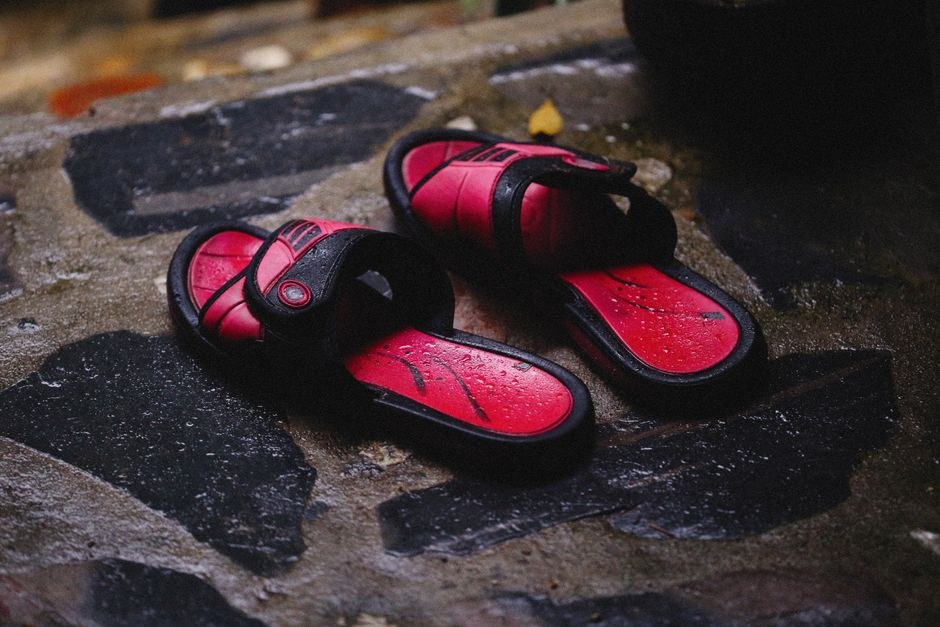
Compare TPR, EVA, rubber, and PVC slipper sole types for bulk orders, covering cost, grip, washability, and retail positioning.
The sole is the part of the slipper that decides whether your program gets repeat orders or a wave of returns. Buyers spend weeks on fabric, lining and trim, then treat the outsole as an afterthought — and that is where the trouble starts. If you are scaling a retail or hospitality line, the outsole you pick changes your unit cost, your packaging, your wash instructions and your returns rate. For bulk OEM cotton slippers, it is a decision you make once per SKU and live with for the whole season.
This guide covers the four sole families you will be quoted in Cixi and Ningbo — TPR, EVA, rubber and PVC — and what each one means commercially. By the end you should be able to look at a quote line and know whether the sole belongs on your product or your competitor's.
TPR Soles: The Default for Retail OEM Cotton Slippers
Thermoplastic rubber is the backbone of wholesale slipper soles for the mid-market. It grips well on tile and vinyl, has a slightly rubbery hand feel that reads as quality in the shopper's hand, and holds up to repeated indoor wear without flattening. Most supermarket and specialty retail programs specify TPR for adult indoor slippers.
Where TPR earns its place:
- Anti-slip performance is steady, even on damp bathroom tile — relevant if your packaging claims “anti-slip”.
- It accepts surface texture, so you can create a clean diamond or dotted tread.
- Tooling is straightforward, so unit cost stays predictable at 5,000 pairs and up.
The trade-offs are weight and stiffness. A TPR sole adds grams, which affects your carton weight and ocean freight calculation. It is also not ideal for a slipper you want to fold or compress. If your retail price sits at the value end and every gram of freight matters, look at EVA.
EVA Soles: Light, Washable, and Popular in Private Label
EVA is what you want when the buyer's brief says “lightweight”, “washable” or “travel”. It is foam, so it is soft underfoot, and it takes a textured face easily. Many memory foam slippers sold on marketplaces use an EVA outsole with a fabric wrap, which keeps the slipper light enough to ship economically.
EVA's limitations show up in grip and abrasion on hard floors. If you are supplying a supermarket chain that displays slippers on a hanging strip, an EVA sole lets you hit a low price point, but test it on wet ceramic before you claim anti-slip.
Practical notes for sourcing:
- Ask whether the EVA is virgin or recycled — it changes the density and the story on the hangtag.
- Check thickness in millimeters, not “thick” or “standard”.
- Confirm whether the outsole is stitched, glued, or wrapped-in. Glue lines on EVA can fail in humid warehouses.
Rubber and PVC: Heavy Duty, Hotel, and Value Lines
Molded rubber sits at the durable end. It is the sole you see on slippers intended for outdoor use around a pool, garden or resort path. It grips hard surfaces superbly, resists water, and holds shape for years. The cost and the tooling lead time are higher, so rubber is usually reserved for premium private label or hospitality programs that want a slipper guests remember.
PVC is the value counterpoint. It is cheap, easy to mold, and can be produced in high volumes quickly. The downside is feel — PVC is harder, noisier on tile, and less forgiving over long wear. It also raises questions in markets that scrutinize phthalates and plasticizers. If you sell into the EU, ask your factory for the REACH documentation for the specific PVC compound before you sign off.
Matching the Sole to Your Channel, Not the Catalog
The mistake is choosing a sole because it appears in a catalog photo. Choose it because it fits the channel. A hotel slipper needs a thin, quiet, non-marking sole that tolerates commercial laundering. A supermarket slipper needs a low freight weight and a familiar hand feel. A direct-to-consumer brand selling through social channels needs a tactile, grippy sole the customer notices when the parcel is opened.
One practical exercise: take three competitor SKUs — say, a mid-size supermarket chain's own-label slipper, a marketplace best-seller, and a four-star hotel slipper — and look only at their soles. Note thickness, profile, and heel branding. Then decide which one you are actually competing with. That single decision narrows your slipper sole types down to two, and it makes negotiations with your factory far sharper than asking for “the best sole”.
How to Specify and Test Wholesale Slipper Soles Before Commit
Once you have picked a family, lock the specification so there is no drift between the sample you approve and the container you receive. Do it in writing with the factory:
- Density and thickness in numbers — for EVA and memory foam, ask for density in kg/m³ and outsole thickness in mm, not adjectives.
- Surface pattern — request a tread drawing or photo submitted with the golden sample.
- Grip test — ask for a simple tile-and-water test result or run one yourself on the pre-production sample.
- Color and hardness — confirm both for wholesale slipper soles, since two suppliers will not match by eye.
- Branding — whether the logo is embossed, printed, or a fabric label, and where it sits.
A reliable factory will not resist this. In Cixi and Ningbo, the better plants already keep density records for slab stock and will quote a thickness tolerance without being pushed. If a supplier cannot tell you what their EVA weighs per cubic meter, treat the quote as unfinished. Get the sole spec into the approval sheet beside fabric and lining, and you will spend far less time arguing over returns in March.
Tags: slipper soles, OEM cotton slippers, wholesale slipper soles, TPR, EVA, sourcing