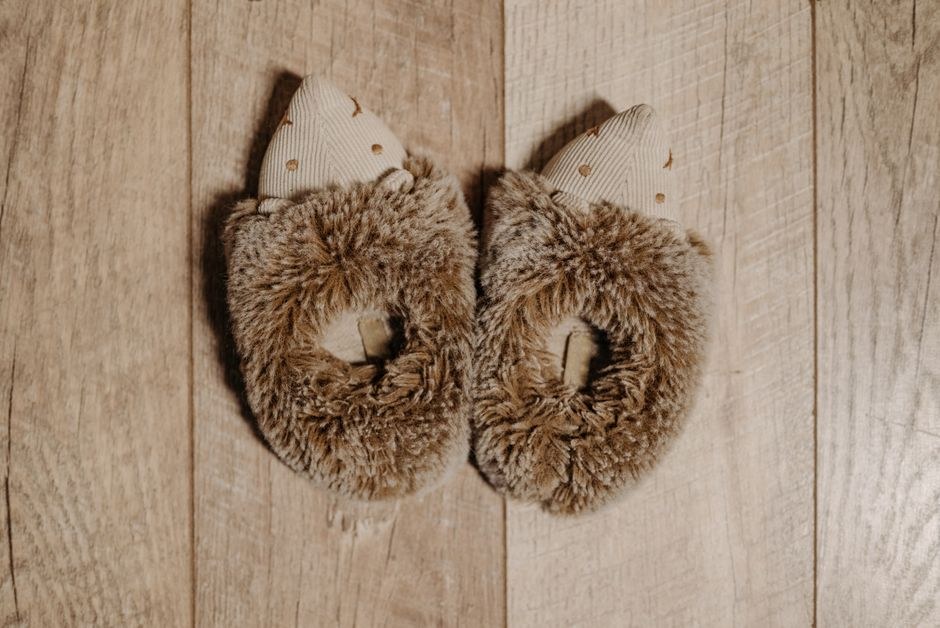
A buyer's guide to plush and fleece slipper fabrics, linings and warmth ratings, plus how to brief a plush slippers supplier for bulk orders.
If a customer returns a pair of slippers because the inside went flat after two weeks, the fibre blend is a bigger culprit than the price. Buyers who treat warmth as a spec rather than a marketing word get fewer complaints and better repeat orders. This guide runs through what a plush slippers supplier actually puts inside a winter slipper, how fleece slipper fabric grades differ, and how to brief the factory so the sample you approve is the one that ships.
Start with the outer fabric, not the label
Two slippers can look identical on a shelf and behave completely differently after three wash cycles. What separates them is fibre type, pile height, backing and weight. Ask any plush slippers supplier for a spec sheet before you ask for a price, because the quote only means something once the material is fixed.
- Polyester plush (often sold as coral or velour fleece): dense, cheap, holds colour well. Pile heights around 3–8mm cover most supermarket lines. Higher pile looks richer but sheds more if the fibre is short-staple.
- Sherpa and faux shearling: curly, lofty surface, strong visual warmth. Usually a bonded knit; the backing quality decides whether it pills.
- Faux suede and microfibre: better for moccasin and men's styles where you want structure, less for visible plush.
- Knitted cotton and terry: breathable and washable, but a different product position — spa, hotel, summer, and the washable end of the winter range.
A useful rule: the outer fabric sells the first pair, the lining sells the second. Supermarkets competing on price can downgrade the shell; downgrading the lining is what generates returns.
Fleece slipper fabric: the four numbers that decide quality
When you compare quotes across three or four factories, differences of a few cents per pair usually trace back to the same four variables in the sheath. Get these on paper.
- Fibre composition. Recycled polyester, virgin polyester and acrylic blends all behave differently. Recycled is now common and defensible in eco-positioned ranges, but confirm the percentage, not just the word.
- Weight per square metre. This drives warmth and hand feel more than pile height. A thin high-pile fabric looks plush and feels cold.
- Pile height and density. Together they determine softness and how quickly the surface mats down.
- Backing and bonding method. A knit backing with good bonding resists delamination through washing and wear. Cheap glue shows up as separation at the toe and heel.
Fleece slipper fabric that mixes wool with synthetic fibre can feel warmer and more premium, though it costs more and complicates care labelling. If you are selling to a market that reads fibre content, the composition line on the label needs to match the mill certificate.
Linings, fillings and what "warmth rating" should mean to you
Warm lined slippers are not one product. The warmth comes from the combination of outer shell, lining, filling, sole and construction. A practical buyer's scale looks something like this:
- Light: single-layer cotton or terry lining, EVA or thin TPR sole, unlined cuff. Spa, hotel, travel and transitional seasons.
- Mid: brushed fleece or short-pile plush lining, 5–10mm memory foam insole, TPR or rubber sole. The volume supermarket and mid-market winter line.
- High: sherpa or high-pile plush lining, plus foam insole and full bootie construction with knitted cuff. Cold-climate retail and gifting.
Filling matters as much as the lining. Memory foam density and thickness decide underfoot comfort; a low-density foam at 10mm feels firmer and flatter faster than a denser 5mm insert. For warm lined slippers, the practical tests are simple: wear-test a sample pair at room temperature for two hours and note heat build-up, then wash and dry per the care label and re-measure pile height and lining loft. That rinse test tells you more than any supplier's warmth claim.
Briefing your supplier in one page
Write a single spec page covering outer fabric composition and weight, lining type and pile, filling type and density, sole material and hardness, cuff construction, care label wording and the market's test requirements. Ask for the mill or fabric supplier name and the batch reference. If the supplier cannot name the mill behind the fabric, you are quoting a black box. A Cixi slipper factory will typically commit this to a technical pack and develop samples within a normal sampling window once all fields are filled in.
How to compare quotes without being fooled
Ask each supplier to quote the same fabric spec plus two alternates: a downgrade and an upgrade. Then compare like for like per pair at the same order quantity and the same Incoterm. Where quotes diverge, ask which material field changed. In most cases it is fabric weight, foam density or packing cost, not labour.
Next steps before you place a bulk order
Run a small trial order first, ideally one size run in two or three colourways, and wear-test or wash-test the pairs before committing to a seasonal volume. Confirm MOQ, lead time, packaging and inspection terms in writing at the same time, so the sample you approved is the reference the final inspection is measured against.
Before shipping, get the mill certificate, a bulk fabric swatch and a sealed approved sample signed by both sides. Keep those three documents. When a future shipment feels thinner than the last one, they are what let you raise the issue with evidence rather than opinion.
Tags: plush slippers, fleece fabric, slipper lining, OEM slippers, winter slippers