Compare ready stock vs OEM cotton slippers for wholesale. Understand lead times, MOQ, cost per pair, and flexibility to choose the right supply model for your business
Buyers who assume OEM is always cheaper than ready stock often discover the opposite when they run the numbers on a first order. A 3,000-pair OEM run may price at $2.20 per pair, while the same style from ready stock sits at $2.60 — until you add tooling, sampling, and a 45-day production window. The real decision is not which model is better on paper, but which one fits your sales channel, cash flow, and tolerance for risk.
Ready Stock Slippers: Speed and Simplicity for First Orders
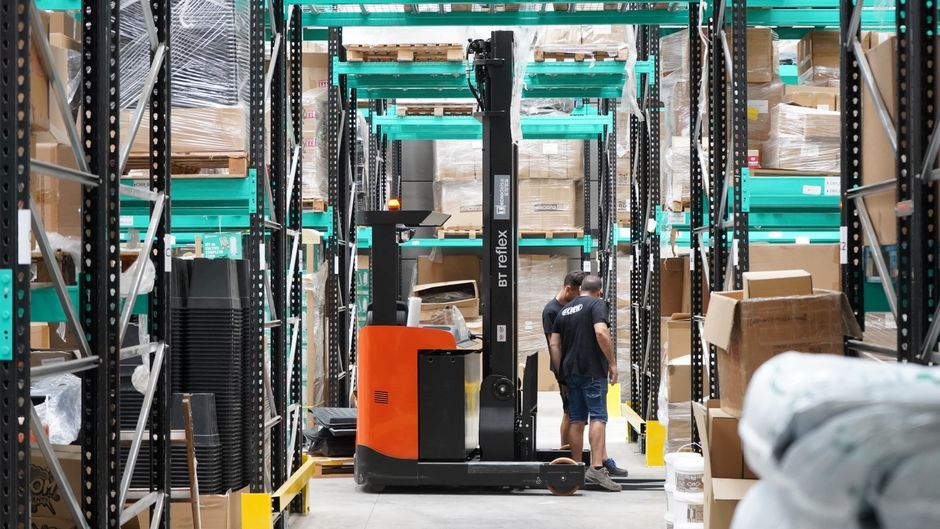
Ready stock slippers are finished goods held in a factory or trading warehouse, available for immediate allocation. You pick from an existing catalogue, confirm quantity, and ship — often within 7 to 15 days.
This model suits importers testing a new market, small retail chains filling a mid-season gap, or e-commerce sellers who cannot forecast demand three months ahead. The trade-off is limited variety and no branding. You get what exists, not what you imagined.
- Lead time: 7–15 days from deposit to dispatch, versus 45–60 days for OEM.
- MOQ: Often 500–1,000 pairs per colour, sometimes lower for mixed pallets.
- Cost: Higher per-pair price because the factory has absorbed design, tooling, and inventory risk.
- Flexibility: You can switch styles mid-season, but you cannot change materials, sizing, or packaging.
For a supermarket chain that needs 2,000 pairs of basic men’s memory foam slippers before a cold snap, ready stock is the only sane choice. OEM would miss the window entirely.
OEM Slippers Supply: Control, Branding, and Long-Term Margin
OEM slippers supply means the factory produces to your specification — your fabrics, your sole, your logo, your packaging. The primary keyword here is OEM slippers supply, and it is the model that builds brand equity.
This path makes sense once you have validated demand. You know your best-selling silhouette, your target retail price, and your repeat order volume. OEM lets you differentiate: a washable cotton upper, a specific TPR sole hardness, a printed gift box.
The cost structure shifts. Your per-pair price drops at volume — typically 15–30% below ready stock for equivalent quality — but you absorb sampling fees, tooling for custom soles or logos, and a production deposit. You also commit to a forecast.
- Lead time: 45–60 days production, plus 10–15 days for sampling and approval.
- MOQ: Commonly 1,000–3,000 pairs per style, depending on material and complexity.
- Cost: Lower unit cost at scale, but higher upfront investment and risk.
- Flexibility: Low during the production window; high in design before tooling is cut.
A mid-size brand owner ordering 20,000 pairs annually will almost always beat ready-stock pricing with OEM, even after tooling. A boutique hotel buying 500 pairs for a seasonal promotion will not.
Where the Two Models Overlap — Hybrid Sourcing
You do not have to choose one exclusively. Many importers run a hybrid: ready stock for fill-in and urgent replenishment, OEM for core SKUs. This works when the factory offers both — common in Cixi, where many plants hold stock of basic styles while running OEM lines.
The risk is confusion. If your ready-stock slippers and your OEM slippers use different materials or sizing, you create inconsistency for your customer. Keep the two streams visually distinct — different colours, different labels, or different sales channels.
A practical rule: use ready stock to test a new silhouette. If it sells through in one season, move it to OEM for the next order. You validate demand before paying for tooling.
Cost Comparison: A Hypothetical 5,000-Pair Order
Numbers vary by style, but the structure matters more than the figures. Say you need 5,000 pairs of women’s knitted cuff winter bootie slippers.
Ready stock: $3.10 per pair FOB Ningbo. Total goods cost $15,500. Deposit 30%, balance on shipping. Lead time 12 days. No tooling, no sampling. You receive standard polybag packaging.
OEM: $2.45 per pair FOB Ningbo at 5,000 units. Total goods cost $12,250. Add $350 sampling and $500 logo tooling. Effective cost $13,100. Lead time 55 days. You get custom woven labels and a printed box.
OEM saves roughly $2,400 on goods, but you wait two extra months and tie up a deposit earlier. If your retail season starts in 60 days, ready stock wins despite the higher price. If you have 90 days, OEM wins on margin and branding.
This is why the question “which is cheaper?” is the wrong one. The right question is: what does my calendar allow, and what is my cost of stock-out?
How to Decide — A Practical Checklist
Work through these points with your supplier before committing.
- Demand certainty: Do you have historical sell-through data for this style? If not, start with ready stock.
- Time to shelf: Count back from your in-store date. If you have less than 70 days, ready stock is your only option.
- Branding requirement: If your logo must appear on the slipper or packaging, OEM is mandatory. Ready stock rarely offers custom labels.
- Order volume: Below 1,500 pairs, OEM pricing often loses to ready stock after sampling and tooling.
- Cash flow: OEM ties up 30–50% deposit for two months. Ready stock typically requires full payment before dispatch, but the cycle is short.
- Repeat potential: If you expect to reorder the same style within 12 months, invest in OEM now. Amortised tooling becomes negligible.
Ask your supplier for both quotes side by side — ready stock and OEM — for the same silhouette. A transparent factory will show you the breakeven volume. If they cannot, you are talking to a trader, not a manufacturer.
Finally, treat your first order as a test, not a commitment. Order ready stock, measure sell-through by size, colour, and channel. Then place an OEM order for the winners. That sequence protects your cash and teaches you what your market actually buys.
Tags: stock slippers wholesale, OEM slippers supply, ready stock slippers, cotton slippers sourcing, supply model