A step-by-step verification process to confirm the legitimacy and capabilities of a wholesale cotton slippers manufacturer in China before you place a bulk order.
Most buyers who get burned by a Chinese slipper supplier skip verification not out of laziness but because they don't know what to check. They confirm the company exists, exchange a few emails, and place a sample order. That is not verification; it is a hope. Below is a sequence that actually reduces risk, from your desk in week one through to a production floor visit in month two.
Start with documents, but read them for what they prove
Any supplier can send you a business license. The useful question is whether the document matches the story. A verify slipper manufacturer process begins with three checks: the registered business scope should include slipper manufacturing, not just trading; the registered capital and establishment date should fit a factory that claims 16 years in business; and the legal representative should be reachable if something goes wrong. Ask for the license and the factory's export registration. If the supplier is a trading company posing as a factory, the license will usually show a scope like "import and export trade" rather than production. That is not automatically disqualifying — some traders add real value — but it changes your pricing and your recourse.
Next, request the audit certificates they claim. BSCI and ISO 9001 are common in this cluster, and a genuine certificate has a registration number you can check with the issuing body. A scanned certificate with the number blurred is not evidence. If the supplier cannot produce a verifiable number, treat the claim as marketing.
Test capability with a small, specific order
Capability claims are cheap. A useful test is to ask for something narrow and verifiable. For example, request a quote for 2,000 pairs of memory foam slippers in three sizes, with your logo embroidered on the side and retail-ready packaging. The response tells you a lot: a real factory will ask about foam density, fabric GSM, sole material and packaging dimensions before quoting. A trader will often send a price immediately and ask questions later.
When you order samples, ask for two sets: one in your target spec and one in a slightly different spec, so you can see how the factory handles a change. Pay attention to whether the sample matches the spec sheet, whether the stitching is consistent, and whether the sole is actually the TPR or EVA you specified. This is also the point to ask for a video walkthrough of the production line — not a generic factory tour video, but a live call where you ask them to pan to the cutting table, the stitching line and the packing area. A factory that hesitates on a live walkthrough is telling you something.
Use a China factory audit to confirm what documents cannot
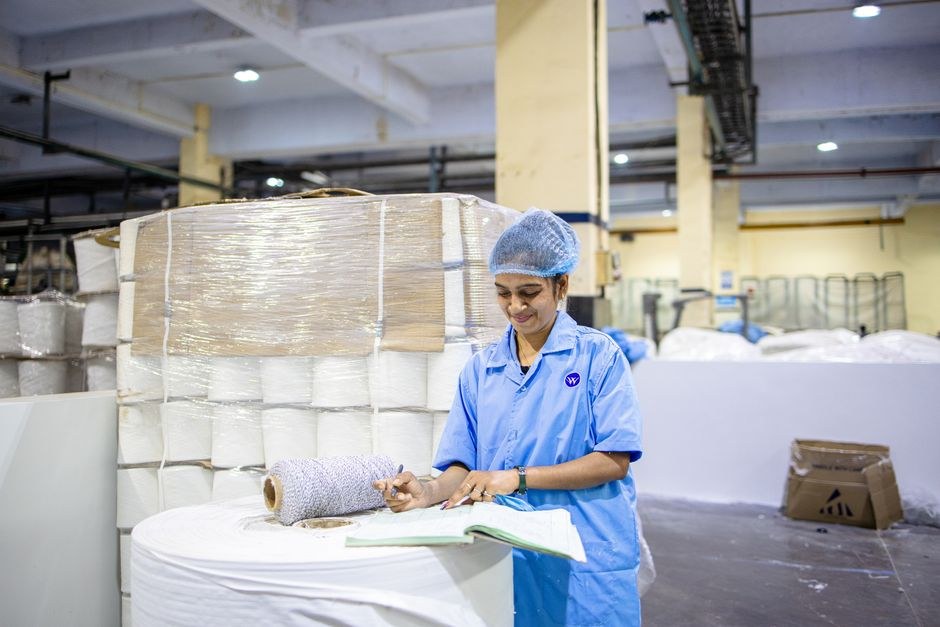
Documents and samples cover paperwork and product. A China factory audit covers the gap: whether the organisation behind the samples can actually produce your order on time and to standard. You have two options. A third-party audit from a recognised inspection firm gives you an independent report you can share with your own compliance team. A remote audit, where you join a video call and direct the camera yourself, is cheaper and often sufficient for a first order.
Whichever route you choose, structure the audit around five questions:
- How many stitching lines run at once, and what is the current load? A factory that is 90% booked may not be able to start your order when promised.
- Where do the materials come from? Ask to see fabric rolls in storage and check the GSM against your spec.
- What is the in-house QC process? Look for a separate inspection area and written defect criteria, not just a final glance before packing.
- How do they handle a failed batch? Ask for the rework or replacement policy in writing.
- Who owns the tools and moulds? For custom soles or logo dies, confirm in the contract that the tooling is yours or that it will be maintained for your exclusive use.
If the audit is remote, ask them to show you the warehouse, the cutting area and the packing line in one continuous call. Breaks in the video are a reason to ask again.
Check references and payment terms for the whole picture
Ask for two or three references from buyers in your region or channel. A factory that supplies supermarkets will have different references than one that supplies hotels. Treat references as a starting point, not proof — a supplier will only give you happy customers — but the way they respond tells you whether they have a real client base. If they cannot name a single buyer in your channel, ask why.
Payment terms are the last verification step. Standard terms for a first order are a deposit with the balance against a copy of the bill of lading. Be cautious of a supplier who demands full payment upfront, and equally cautious of one who offers unusually generous terms to win the order. For orders above a certain value, consider a letter of credit or an escrow arrangement. The wholesale cotton slippers market is competitive enough that a legitimate factory will accept reasonable terms; a supplier who will not negotiate at all is either desperate or inflexible, and neither is a good long-term partner.
What to do with what you find
Verification is not a pass/fail test; it is a risk map. If the documents check out, the sample is good and the audit raises no red flags, proceed with a first order sized to your risk tolerance — often 1,000 to 3,000 pairs — and schedule a pre-shipment inspection before the balance is paid. If the documents are clean but the audit is weak, ask for a follow-up call and a corrective action plan; many factories improve when they know a buyer is serious. If the license does not match the claim or the audit reveals a trading operation with no production floor, walk away. The cost of a wasted sample order is small; the cost of a container of slippers that fails your spec is not.
Keep a written record of every claim the supplier makes, from lead times to certification numbers, and hold them to it in the purchase order. That record is what you will rely on if a dispute arises later, and it is the difference between a supplier relationship and a gamble.
Tags: sourcing tips, supplier verification, cotton slippers, China factory audit, wholesale sourcing